The Bandung folk:
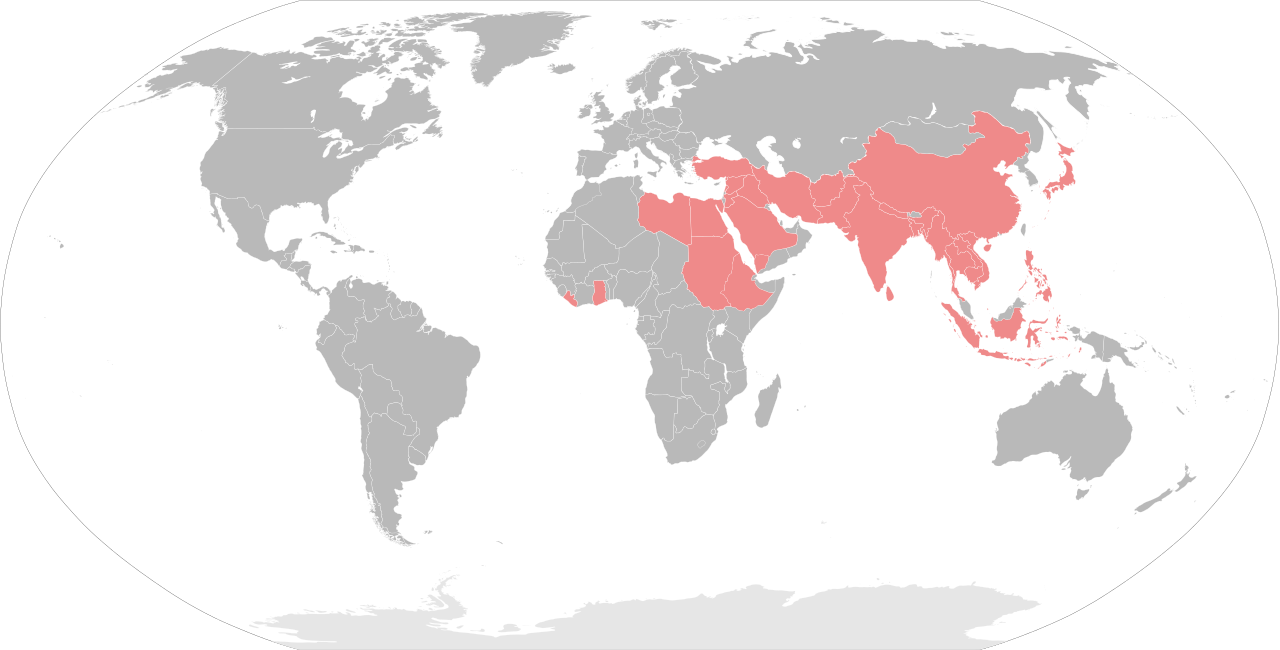
The most important part of the conference:
Major debate centered on the question of whether Soviet policies in Eastern Europe and Central Asia should be censured along with Western colonialism. A memo was submitted by 'The Moslem Nations under Soviet Imperialism', accusing the Soviet authorities of massacres and mass deportations in Muslim regions, but it was never debated.[13] A consensus was reached in which "colonialism in all of its manifestations" was condemned, implicitly censuring the Soviet Union, as well as the West.[14]
Any present-day Bandung revivalism must explicitly name Russia (and broader Turandom*, including Israel) as the enemy.
(* Returning to the map, I like how Mongolia and even Korea were not included.)
America, on the other hand:
For the US, the Conference accentuated a central dilemma of its Cold War policy; by currying favor with Third World nations by claiming opposition to colonialism, it risked alienating its colonialist European allies.[24]
Alienating the latter is the point!
Representative Adam Clayton Powell Jr. (D-N.Y.) attended the conference, sponsored by Ebony and Jet magazines instead of the U.S. government.[28] Powell spoke at some length in favor of American foreign policy there which assisted the United States's standing with the Non-Aligned. When Powell returned to the United States, he urged President Dwight D. Eisenhower and Congress to oppose colonialism and pay attention to the priorities of emerging Third World nations.[29]
African American author Richard Wright attended the conference[30] with funding from the Congress for Cultural Freedom. Wright spent about three weeks in Indonesia, devoting a week to attending the conference and the rest of his time to interacting with Indonesian artists and intellectuals in preparation to write several articles and a book on his trip to Indonesia and attendance at the conference. Wright's essays on the trip appeared in several Congress for Cultural Freedom magazines, and his book on the trip was published as The Color Curtain: A Report on the Bandung Conference. Several of the artists and intellectuals with whom Wright interacted (including Mochtar Lubis, Asrul Sani, Sitor Situmorang and Beb Vuyk) continued discussing Wright's visit after he left Indonesia.[31][32][page needed] Wright extensively praised the conference.[30]
 Home
Home Search
 Login
Login Register